



The Problem
DC Tax Filings had real clients and real revenue, but almost no digital infrastructure supporting either:
- No online presence — no way for prospective clients to find the business, learn what it offered, or get in touch outside of word of mouth
- Paper-based recordkeeping — physical files for client documents, with all the risk that implies: loss, damage, no backup, no searchability
- Fragmented spreadsheets — different aspects of the business (clients, filings, deadlines) tracked in separate, disconnected files with no single source of truth
- No repeatable process — each new client was onboarded ad hoc, with no standard intake, no document checklist, and no way to see at a glance who needed what and by when
- A ceiling on growth — with everything manual, taking on more clients meant taking on proportionally more administrative load, with no way to absorb it
The Approach
This was a ground-up build: a public-facing website to establish credibility and generate inquiries, paired with an operational backbone to run the practice once those inquiries became clients.
Website build
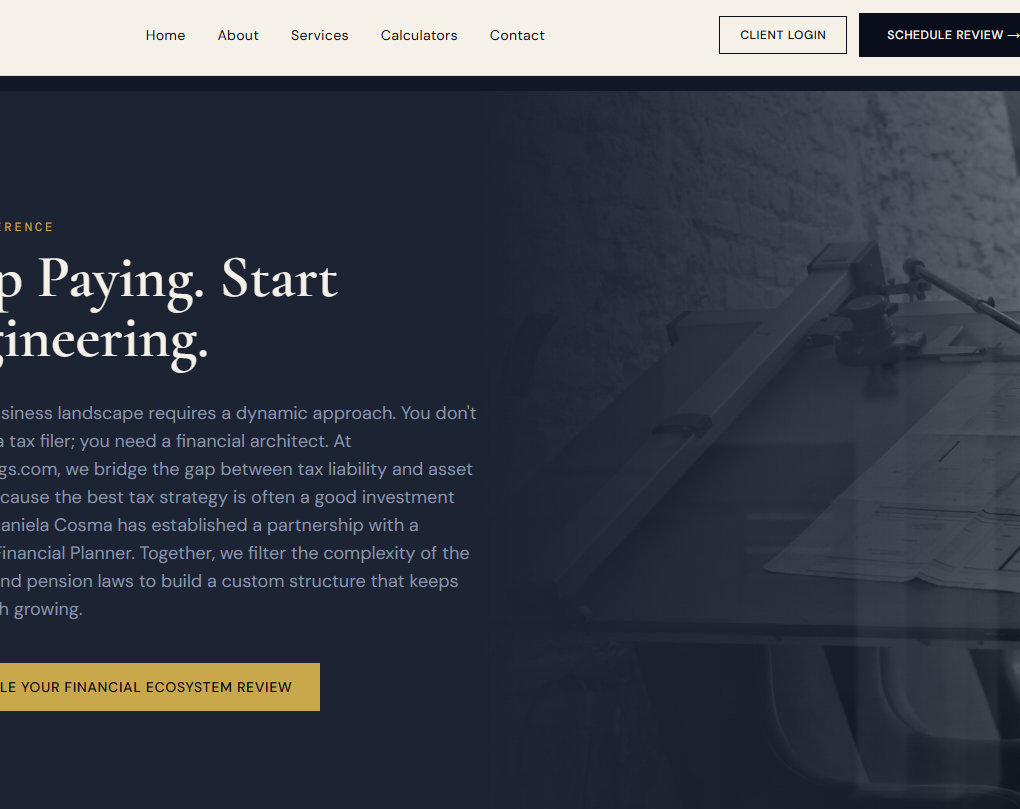
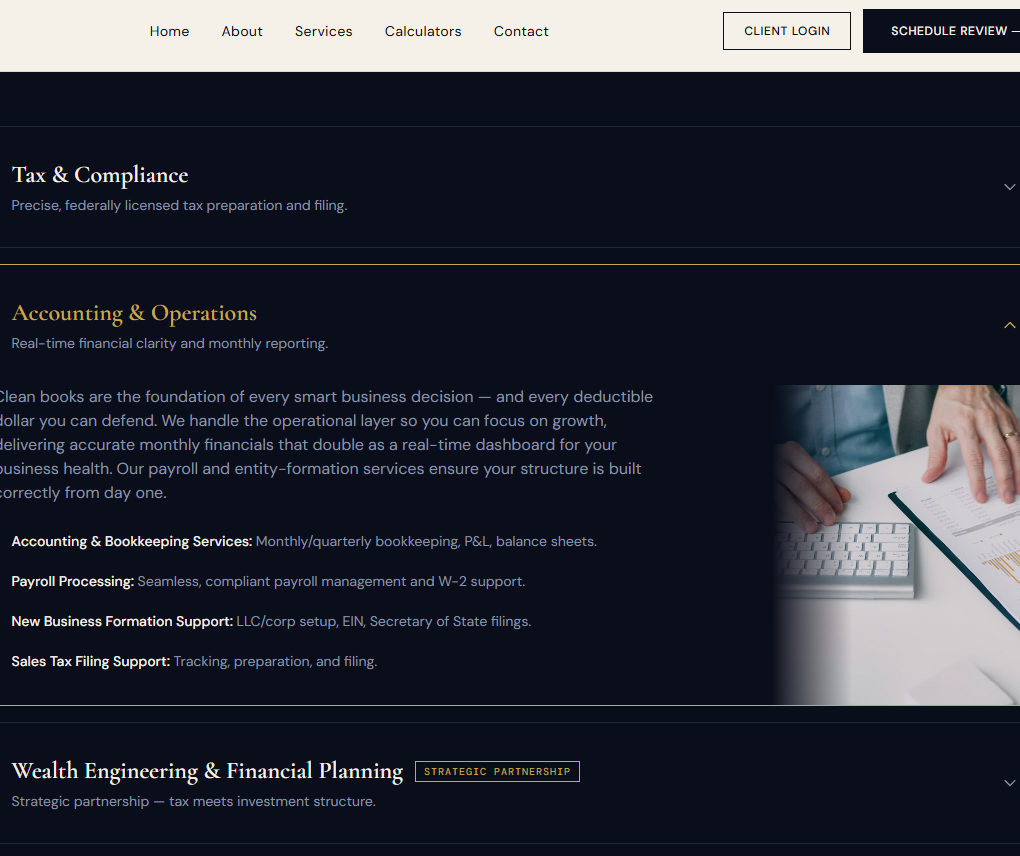
- Designed and built DCTaxFilings.com from scratch — the business’s first web presence
- Structured around how prospective clients actually evaluate a tax preparer: clear service breakdowns, credibility signals, and a straightforward path to get in touch
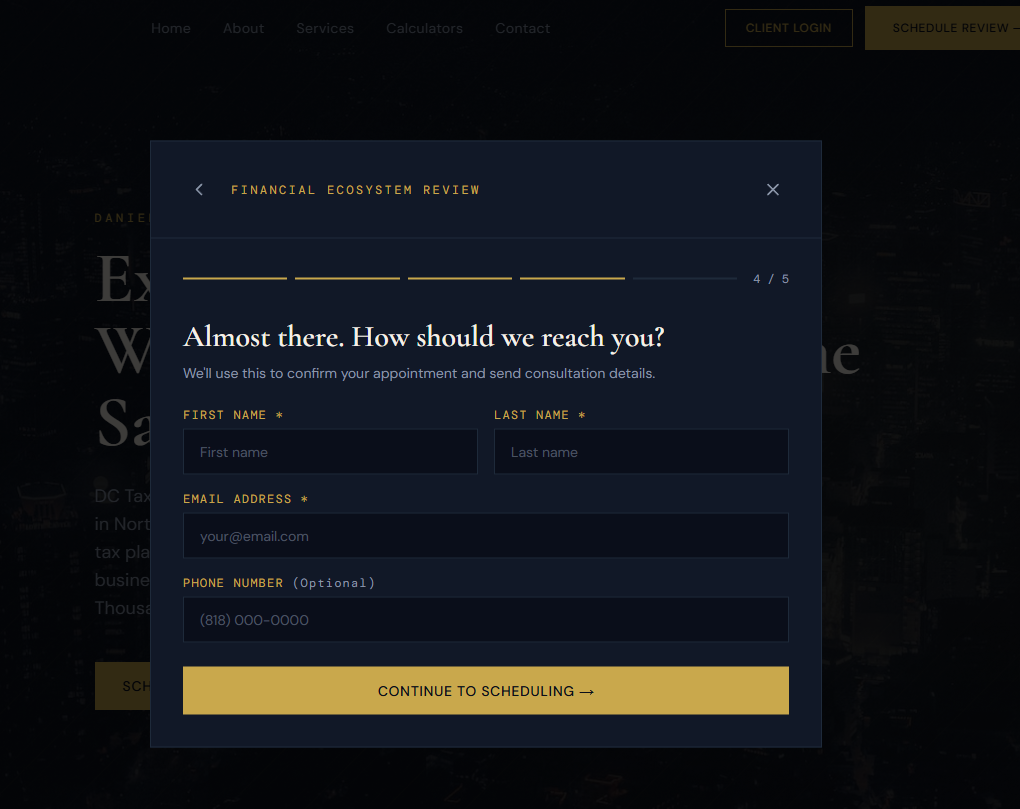
- Built a booking flow so prospective and existing clients could schedule directly, removing back-and-forth email scheduling
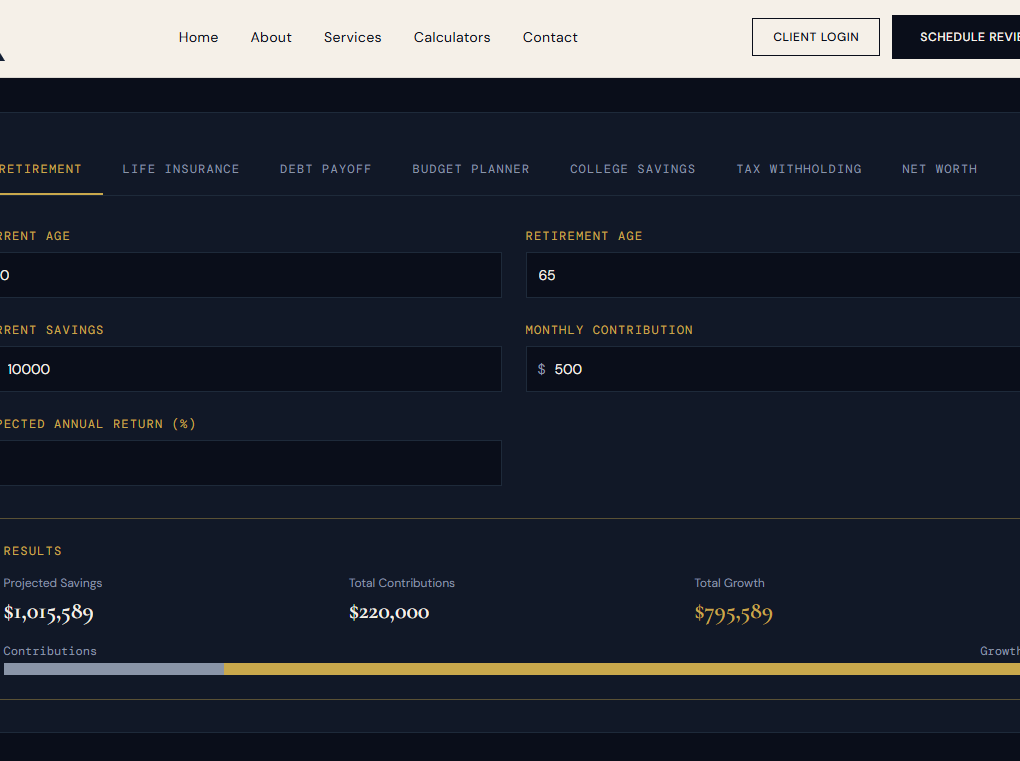
- Included financial calculators relevant to the practice’s services, giving visitors a reason to engage with the site beyond a static brochure
- Local SEO groundwork so the business is findable by the people searching for a tax preparer in its area, not just by people who already know it exists
Operational rebuild
- Migrated client recordkeeping off paper and scattered spreadsheets into TaxDome, giving the practice one system for documents, client communication, and filing status
- Mapped and implemented a standard client onboarding flow — intake, document collection, and status tracking that works the same way every time, regardless of who’s handling it
- Built the operational documentation (SOPs) so processes aren’t dependent on Daniela’s memory or ad hoc habits — anyone stepping in later can pick up exactly where the system leaves off
- Connected the website’s intake path to the operational system, so a new inquiry has a defined, trackable route from “form submission” to “onboarded client”
The Solution
The practice now runs on two integrated systems instead of zero: a website that brings clients in, and TaxDome that manages them once they’re in. Documents that used to live in a filing cabinet — vulnerable to loss, impossible to search, accessible only in person — now live in a system built for exactly this kind of work: secure, centralized, and organized by client and filing year.
Just as importantly, the process is no longer improvised per client. There’s a defined intake sequence, a defined document checklist, and a defined way of tracking where every client stands. That consistency is what actually creates capacity — not working faster on the same ad hoc process, but removing the ad hoc part entirely.
The Results
- A public, findable web presence where there was none before — the business’s first real front door for new clients
- Zero paper dependency for client records, replaced by a searchable, centralized system in TaxDome
- A single source of truth replacing a patchwork of disconnected spreadsheets
- A repeatable onboarding process, meaning new client intake no longer depends on Daniela personally reinventing the steps each time
- Meaningfully reduced administrative overhead, freeing up time previously spent on manual file handling and status tracking
- More capacity for growth — with the operational load off manual processes, the practice can take on new clients without a proportional increase in admin burden